 Introduction to Kyoto’s Tea Ceremony
 Introduction to Kyoto’s Tea Ceremony
What is a Tea Ceremony?
A tea ceremony, or chanoyu, is a traditional Japanese ritual that involves the ceremonial preparation and serving of matcha (powdered green tea). It’s more than just drinking tea—it’s a meditative practice that embodies harmony, respect, purity, and tranquility. Every gesture, from the way the tea is whisked to how it’s presented, holds deep cultural significance. For travelers, it’s a unique opportunity to immerse yourself in Japan’s rich heritage and slow down, even if just for an hour.
Why Kyoto is the Best Place to Experience It
Kyoto, Japan’s ancient capital, is the heartbeat of Japanese culture and the ultimate destination to experience a tea ceremony. Here’s why:
- Centuries of Tradition: Kyoto has preserved its tea culture for over 1,000 years, making it the ideal place to witness authentic ceremonies.
- Scenic Settings: Many tea houses are nestled in serene gardens or historic machiya (traditional wooden townhouses), offering a peaceful escape from the city’s hustle.
- Accessible for Tourists: Kyoto caters to visitors, with many tea houses offering English-friendly sessions and affordable options for budget-conscious travelers.
- Cultural Immersion: Beyond the ceremony, Kyoto’s tea culture is woven into its temples, markets, and daily life, giving you a deeper connection to the city.
Planning Your Tea Ceremony Experience
Best Time to Attend a Tea Ceremony in Kyoto
Timing is everything when it comes to enjoying an authentic tea ceremony in Kyoto. To make the most of your experience, consider visiting during the spring (March to May) or autumn (September to November) seasons. These periods offer pleasant weather and the added bonus of cherry blossoms or fall foliage, which enhance the serene atmosphere. Early mornings or late afternoons are ideal, as they tend to be less crowded, allowing you to fully immerse yourself in the tranquility of the ritual.
How to Find Affordable Options for Budget Travelers
Experiencing a tea ceremony in Kyoto doesn’t have to break the bank. Here are some budget-friendly tips to help you plan:
- Research online: Many tea houses offer discounted rates for early bookings or group reservations. Check websites like Klook or Viator for deals.
- Visit smaller tea houses: While famous tea houses charge premium prices, smaller, lesser-known venues often provide equally authentic experiences at a fraction of the cost.
- Combine with other activities: Some cultural centers or temples include tea ceremonies as part of a larger package, offering better value for your money.
- Look for locals’ recommendations: Ask your hostel staff or local friends for affordable yet reputable options. They often know hidden gems that tourists overlook.
Booking Your Tea Ceremony
Kyoto is home to some of the most authentic tea ceremonies in Japan, and booking one is easier than you might think. Whether you’re a solo traveler, a couple, or a family, there’s a tea house or cultural center that suits your needs. Here’s how to secure your spot and make the most of this serene experience.
Top Tea Houses and Cultural Centers in Kyoto
Kyoto offers a variety of venues where you can experience a traditional tea ceremony. Here are a few standout options:
- Camellia Flower Tea Ceremony: A popular choice for first-timers, offering affordable and beginner-friendly sessions in a serene garden setting.
- En Tea Ceremony: Known for its small-group sessions and English-speaking hosts, perfect for solo travelers or couples.
- Tea Ceremony Koto: Located near iconic landmarks like Kinkaku-ji (Golden Pavilion), this venue combines convenience with authenticity.
- Kyoto Gion Kagai Art Museum: A cultural center that offers tea ceremonies alongside other traditional Japanese arts, great for cultural tourists.
Online Booking Tips and Recommendations
Booking your tea ceremony online is the easiest way to ensure you secure your spot. Here are some practical tips to make the process smooth:
- Book Early: Popular venues like Camellia Flower and Tea Ceremony Koto often fill up quickly, especially during peak tourist seasons. Reserve at least a week in advance.
- Check for Discounts: Some tea houses offer early-bird discounts or group rates. Look for deals on platforms like Klook or GetYourGuide.
- Read Reviews: Platforms like TripAdvisor and Google Reviews can give you insights into the experience, helping you choose the right venue for your preferences.
- Consider Accessibility: If you’re traveling with family or have mobility concerns, ensure the venue is easy to reach and accommodates your needs.
- Opt for English Support: If you’re not fluent in Japanese, choose a tea house with English-speaking hosts to enhance your understanding of the ceremony.
Once you’ve booked, double-check the meeting point and time. Kyoto’s tea houses are often tucked away in quiet neighborhoods, so allow plenty of time to find your way. Now, all that’s left is to immerse yourself in the tranquility of this timeless tradition!
What to Expect During the Ceremony
Attending a tea ceremony in Kyoto is a serene and culturally enriching experience. To help you feel confident and prepared, here’s a step-by-step breakdown of what to expect, along with essential etiquette and cultural norms to keep in mind.
The Step-by-Step Process
A traditional Japanese tea ceremony, or chanoyu, is a carefully choreographed ritual. Here’s a simplified guide to the process:
- Arrival and Preparation: Guests are greeted at the entrance and led to a waiting area, often a tranquil garden, where they can relax and prepare mentally for the ceremony.
- Purification Ritual: Before entering the tea room, guests wash their hands and rinse their mouths at a stone basin, symbolizing the cleansing of the mind and body.
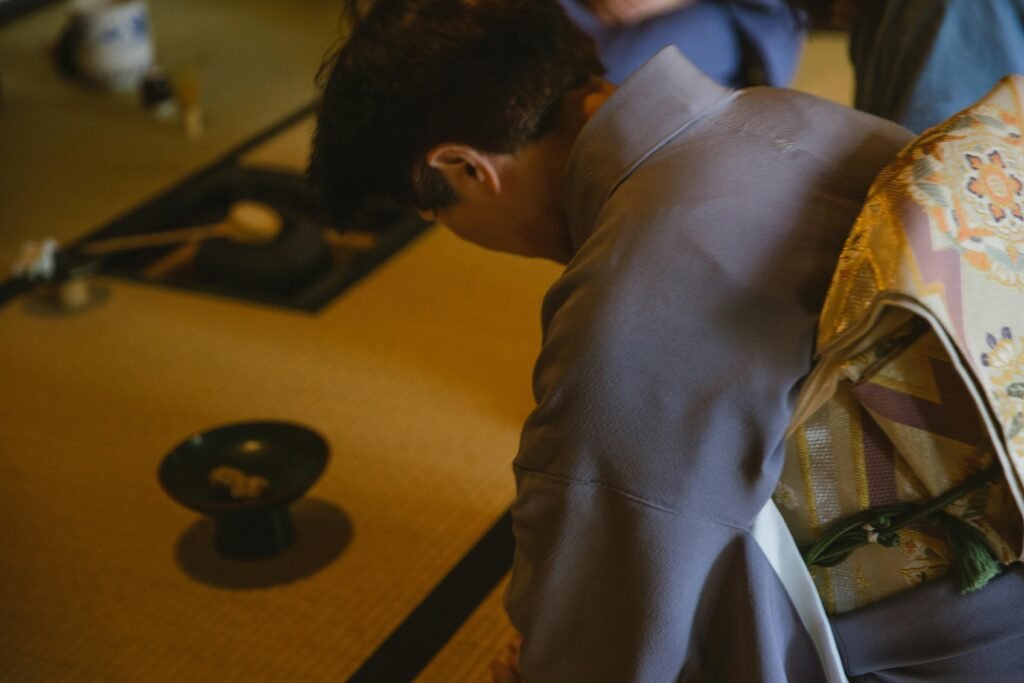
- Entering the Tea Room: Guests remove their shoes and kneel on tatami mats in the tea room. The host enters, and a formal bow is exchanged to show mutual respect.
- Preparation of the Tea: The host meticulously prepares the matcha (powdered green tea) using specific utensils. Every movement is deliberate and graceful, reflecting the principles of harmony, respect, purity, and tranquility.
- Serving the Tea: The host presents the tea bowl to the first guest, who admires it before drinking. The bowl is rotated slightly before sipping, ensuring the front design faces outward.
- Enjoying the Tea: Guests drink the tea in a few quiet sips, savoring its rich flavor. After finishing, they may also enjoy a small sweet treat, which balances the bitterness of the matcha.
Essential Etiquette and Cultural Norms
Understanding the etiquette of a tea ceremony is key to showing respect for this ancient tradition. Here are some important tips:
- Dress Modestly: Wear clean, simple clothing. Avoid flashy or revealing outfits to maintain the ceremony’s serene atmosphere.
- Maintain Silence: The tea ceremony is a meditative experience. Speak softly or not at all, unless the host invites conversation.
- Follow the Host’s Lead: Watch the host closely and mirror their actions. This shows mindfulness and respect for the process.
- Handle Utensils with Care: If the host invites you to examine the tea bowl or utensils, hold them gently and admire them respectfully.
- Bow as a Sign of Respect: Bowing is a common gesture of gratitude and respect. Bow slightly when receiving or returning the tea bowl.
Remember, the tea ceremony is not just about drinking tea—it’s an opportunity to connect with Japanese culture and embrace its philosophy of mindfulness and simplicity.
Tips for First-Time Attendees
What to Wear and Bring
Attending a tea ceremony in Kyoto is a special experience, and dressing appropriately shows respect for the tradition. Here’s what to keep in mind:
- Modest Clothing: Opt for clean, conservative attire. Avoid flashy colors or loud patterns—neutral tones like white, beige, or black are ideal.
- Comfortable Shoes: You may need to remove your shoes before entering the tea room, so wear slip-ons or sandals for convenience.
- Minimal Accessories: Keep jewelry simple to avoid distracting from the ceremony’s serene atmosphere.
- Essential Items: Bring a small bag for personal items, but keep it compact. A notebook or journal can be handy if you’d like to jot down reflections.
How to Respect the Traditions as a Tourist
Understanding and respecting the tea ceremony’s etiquette will enhance your experience and show your appreciation for Japanese culture. Follow these tips:
- Arrive on Time: Punctuality is crucial. Arriving late is considered disrespectful, so plan your journey with extra time.
- Listen and Observe: Pay close attention to the host’s instructions and follow their lead. The ceremony is a meditative practice, so silence and attentiveness are key.
- Proper Handling of Tea Utensils: Handle the tea bowl and utensils carefully, as they are often valuable and hold cultural significance.
- Bow as a Sign of Respect: A slight bow before receiving your tea and again after finishing is a simple yet meaningful gesture of gratitude.
- Mind Your Posture: Sit seiza-style (on your knees) if possible, but don’t worry if it’s uncomfortable—most hosts are understanding and may provide alternatives.
By preparing thoughtfully and embracing the traditions, you’ll not only enjoy the ceremony but also leave a positive impression as a respectful visitor.
Combining the Tea Ceremony with Other Kyoto Experiences
Nearby Attractions and Activities
Kyoto is a city brimming with cultural and historical treasures, making it easy to pair your tea ceremony with other enriching experiences. Kinkaku-ji (The Golden Pavilion) and Ginkaku-ji (The Silver Pavilion) are iconic temples located within a short distance of many tea houses. These serene spots offer a glimpse into Japan’s architectural beauty and are perfect for a post-ceremony stroll. For a more immersive cultural experience, visit the Gion district, where you can explore traditional wooden machiya houses and, if you’re lucky, spot a geisha.
If you’re traveling with family, the Kyoto Imperial Palace and its expansive gardens provide a peaceful setting for all ages. For adventurers, the Arashiyama Bamboo Grove is a must-see, offering a surreal walk through towering bamboo stalks. Nature lovers can also hike the Philosopher’s Path, a scenic trail lined with cherry blossoms in spring and vibrant foliage in autumn.
How to Make the Most of Your Day in Kyoto
To maximize your time in Kyoto, start your day early with a visit to a tea ceremony in the morning. This sets a calm and reflective tone for the rest of your day. Afterward, head to one of Kyoto’s bustling markets, like Nishiki Market, to sample local delicacies and shop for souvenirs. Budget travelers will appreciate the affordable street food options here, from fresh mochi to savory skewers.
For digital nomads and freelancers, Kyoto offers plenty of cozy cafes with reliable Wi-Fi where you can work while soaking in the city’s ambiance. % Arabica Kyoto Arashiyama is a popular spot with stunning views of the Hozu River. Young couples and backpackers might enjoy renting bikes to explore the city’s hidden alleys and lesser-known shrines, such as Shimogamo Shrine.
If you’re a solo traveler, consider joining a guided walking tour to learn more about Kyoto’s history and meet like-minded explorers. Families can opt for a riverboat cruise on the Hozugawa River, a relaxing activity that everyone can enjoy. End your day with a visit to Fushimi Inari Taisha, famous for its thousands of red torii gates. Visiting in the late afternoon or early evening allows you to avoid the crowds and experience the shrine’s mystical atmosphere.
By combining your tea ceremony with these activities, you’ll create a well-rounded Kyoto experience that caters to your interests and travel style. Whether you’re a cultural enthusiast, an adventurer, or a budget-conscious traveler, Kyoto has something special to offer.
Final Thoughts and Recommendations
Attending a tea ceremony in Kyoto is more than just a cultural activity—it’s a transformative experience that offers a deep connection to Japan’s traditions and history. Whether you’re a budget traveler, a digital nomad, or a family with kids, this experience is worth every moment. Here’s why:
Why This Experience is Worth It for All Types of Travelers
For budget travelers, Kyoto’s tea ceremonies are surprisingly affordable, especially when you consider the value of the cultural immersion. Many venues offer packages that include a guided session and a bowl of matcha for a reasonable price. For digital nomads, it’s a chance to unplug, reflect, and recharge amidst the serene beauty of a traditional tea room. Young couples and backpackers will find it a romantic and authentic way to connect with Kyoto’s heritage, while solo travelers can enjoy the peaceful solitude and mindfulness it encourages.
Families traveling with children will appreciate how tea ceremonies can be both educational and calming, offering a break from the hustle and bustle of sightseeing. For cultural tourists, it’s a must-do activity that complements visits to temples and shrines. Even adventurers and ecotourists will find value in the simplicity and harmony of the tea ceremony, which mirrors the balance of nature.
Embrace Kyoto’s Cultural Richness
Kyoto is a city that thrives on its traditions, and the tea ceremony is a perfect gateway to understanding its soul. Don’t just observe—participate fully. Take the time to learn the gestures, appreciate the aesthetics of the tea room, and savor the flavors of matcha. This isn’t just about drinking tea; it’s about embracing a philosophy of mindfulness, respect, and harmony.
Here are a few tips to make the most of your experience:
- Book in advance: Popular tea houses can fill up quickly, especially during peak seasons.
- Dress comfortably: While formal attire isn’t required, wearing modest clothing shows respect for the tradition.
- Arrive early: This gives you time to soak in the atmosphere and prepare mentally for the ceremony.
- Ask questions: Most hosts are happy to explain the significance of each step, enriching your understanding.

FAQ
- Is a tea ceremony suitable for children?
- Yes! Many tea houses welcome families and offer shorter, more interactive sessions for kids.
- Do I need to speak Japanese to participate?
- Not at all. Most tea ceremonies for tourists are conducted in English or with translation guides.
- How long does a tea ceremony last?
- Typically, it lasts between 30 minutes to an hour, depending on the venue and package.
In the end, attending a tea ceremony in Kyoto is more than just a tick on your travel itinerary—it’s a moment of connection, reflection, and appreciation for a culture that has perfected the art of simplicity. So, go ahead, take that step, and let Kyoto’s traditions leave a lasting impression on your journey.

About Grace Castle
Grace Castle, 29, is a passionate traveler and digital nomad who turned her love for exploring the world into a career. With years of experience traveling across different countries, she has mastered the art of smart travel planning, working remotely while discovering new destinations.
An expert in budget travel, local culture, and remote work, Grace shares valuable tips for those looking to travel more while spending less. Her mission is to help fellow travelers explore the world with ease, safety, and authentic experiences.
When she’s not writing about her adventures, Grace can be found discovering cozy cafés, learning new languages, or planning her next trip.